Wine Tank Valves, Stands and Accessories Explained
When people buy a stainless steel tank they usually focus on the size. But it is the fittings that decide how easy the tank is to use day to day: how you draw wine off, how you check it, how you clean it and how high it sits. This guide walks through each one.
Valves
Racking valve
The racking valve is usually set a little above the lowest point of the tank, so that when you draw wine off, the sediment below it stays behind. On a tank with a sump, it sits just above the sump.
Drain valve
The drain valve sits at the very lowest point. It empties the lees after racking and lets rinse water out when you clean. On sump and conical tanks it is the bottom outlet.
Ball valves and butterfly valves
Most tank outlets use one of two valve types:
- Ball valves open and close with a quarter turn and give good control of flow. The Algor 1 inch stainless ball valve goes from a BSP male inlet to a DIN male outlet.
- Butterfly valves are compact and easy to clean, with a disc that turns across the flow. The Algor 25 mm butterfly valve has a metal handle, which stands up better than plastic on a valve that gets heavy use.
Whichever you use, take valves apart to clean them after each use. Wine trapped in the valve body is a common source of spoilage. See How to Clean and Sanitise a Stainless Steel Wine Tank.
Sample valve
A small sample valve lets you draw a glass for tasting or testing without opening the lid, which matters most when the wine is sealed under a floating lid or CO2. We stock a 316 stainless sample tap with a 3/8 inch BSP thread and a 304 stainless 1/2 inch sample valve.
Volume indicator
A volume indicator (or level indicator) is a clear sight tube fixed to the outside of the tank, connected near the base through a small valve, so you can see how full the tank is. The Algor three-way volume indication valve also lets you drain the tube for cleaning. Sight tubes come in different diameters, so measure the outside diameter of yours before ordering.

Photo: Algor
Thread sizes: measure before you order
Tank fittings use several thread standards, most commonly BSP (British Standard Pipe) on tank outlets and DIN (a European standard) on hose connections. Many valves have a different thread at each end. Before ordering any valve or fitting, check:
- the thread type and size on the tank
- the thread or hose size you are connecting to
- whether you need 304 or 316 stainless, to match your tank
If in doubt, send us a photo with a tape measure in shot, or bring the part into Laverton North or Epping.

Photo: Algor
Stands
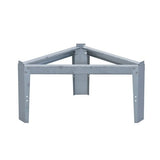
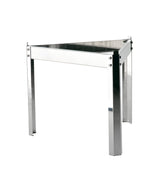
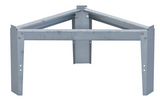
Flat base tanks without legs need a stand. A stand lifts the valves to a height where you can get a bucket, pump or hose underneath, makes cleaning much easier, and keeps the base of the tank off a damp floor.
- The Algor tank pedestal kit is 304 stainless and suits round-bottom variable capacity tanks from 640 to 940 mm in diameter.
- The stainless steel tank stand channel kit is chosen by tank diameter, from 480 to 1020 mm.
- The stainless steel tank stand with sump suits tanks with a sump, in sizes for 200 to 300 litre and 400 to 600 litre tanks.

Match the stand to the tank's outside diameter, and set it on a level, solid floor. A full tank is very heavy.
Lids, airlocks and seals
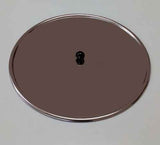
- Dust lid. A stainless dust lid sits over the open top of a variable capacity tank to keep dust, insects and light off the floating lid. Sizes run from 450 to 940 mm.
- Airlock extension. An airlock extension raises the airlock clear of the lid so it is easy to see and refill.
- Floating lid spares. Seals, inflation hoses, hand pumps and gauges all wear over time. We cover them in Variable Capacity Wine Tanks Explained.

CO2 gassing for closed tanks
A closed tank that is not completely full has air above the wine. One answer is to blanket that space with CO2. Our auto CO2 gassing system keeps a gentle CO2 pressure on one or more tanks, and the Equip-Pro CO2 pressure loss detector sits in the gas line and flags a pressure loss, so you find out about a leaking seal before it affects the wine.
A sensible starting kit
- Racking valve and drain valve (or a tank with both fitted)
- Sample valve
- Stand or legs
- Dust lid
- Spare seal and hose for a floating lid
- Cleaning gear
Browse all tank stands and accessories and stainless steel tanks. Still choosing a tank? Start with How to Choose a Stainless Steel Wine Tank.
Pre-order wine tanks from our next container
Can't see the size or style you need, or want to plan ahead for vintage? We can take pre-orders for wine tanks and bring them in on our next container. Contact us for more information.