How to Store Olive Oil in a Stainless Steel Tank
To store olive oil well, keep it in a full, sealed, food-grade stainless steel tank in a cool, dark place, and draw it off the top of its sediment. Oxygen, light and heat are what spoil olive oil, and a good stainless tank deals with all three. This guide covers why stainless steel works, how to choose and size an olive oil tank, and how to look after the oil once it is in there.
It is the storage side of our guide How to Make Olive Oil at Home, and it applies just as well if you buy oil in bulk.
What spoils olive oil
Olive oil is fresh juice, not a fixed product. From the day it is pressed it slowly changes, and the speed of that change depends almost entirely on how it is stored. The main culprits are:
- Oxygen. Air in contact with the oil causes oxidation, which turns it flat and eventually rancid. This is the big one.
- Light. Sunlight and even bright indoor light speed up oxidation and fade the colour and aroma.
- Heat. Warmth speeds up every one of these reactions. A tank in a hot shed ages oil much faster than one in a cool pantry.
- Sediment and water. New, unfiltered oil carries fine solids and a little water. If the oil sits on them for months, it can pick up muddy, fusty flavours.
- Smells and contamination. Oil absorbs odours easily. Containers that are porous or not properly clean pass flavours straight into it.
Why stainless steel
A stainless steel tank takes care of most of that list on its own:
- It blocks light completely, unlike clear glass or plastic.
- It does not breathe. With the lid on, no air gets through the walls.
- It is inert. Food-grade stainless steel does not react with the oil or change its colour, aroma or taste.
- It is non-porous, so it does not hold on to old oil or smells, and it cleans properly between seasons.
- It lasts. Looked after, a stainless tank will see out decades of harvests.
That is why Italian producers, from small family groves to large mills, store their oil in stainless steel. The tanks we stock are made in Italy for exactly this job.

Photo: Algor
Choosing an olive oil tank
Size
Start with how much oil you get in a good season, then plan how you will use it. Air above the oil is the enemy, and every time you draw oil off, the air gap gets bigger. So for most home growers, several smaller tanks are better than one big one. You empty one at a time and leave the others full and sealed.
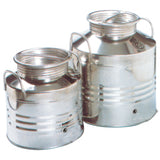
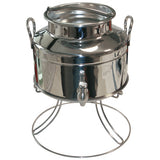
Our olive oil tanks with screw lid and folded base come in 10, 15, 20, 30, 50, 75 and 100 litre sizes. For the kitchen bench there is a 3 or 5 litre tank with screw top lid and tap, and for larger groves a 300 litre TABEC tank with a conical base and welded legs.

Freight tip: nest your tanks and save
Stainless tanks are light for their size, so freight is charged mostly on the space a carton takes up, not its weight. If you are buying more than one size, ask us to pack the smaller tank inside the bigger one. Two nested tanks travel in one carton, which can cost a lot less to send than two separate cartons. It is worth asking before you order.
Base shape
A folded base drains more completely, which matters when you are drawing off oil and do not want to leave the last litre behind. A welded flat base tank sits level on a bench or stand and is easy to wipe out. Either works well for oil. Larger conical base tanks let the sediment collect at the lowest point so you can drain it away separately.
The tap
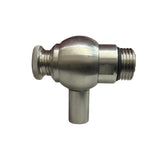
Olive oil is thick and drips, so a tap designed for oil makes a real difference. The rotary nozzle olive oil tap turns the spout up after use to stop drips, and the lever handle oil tap is a simple alternative. Both fit a standard half inch BSP socket. Keep the tap a little above the base so you draw clear oil off the top of any sediment.

The lid
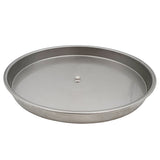
A screw top lid with a good flat O ring keeps a full tank sealed and is all most home growers need. For a tank you will be drawing from over months, an oil system floating lid is worth considering. It sits directly on the oil and goes down as the level drops, so very little of the oil is ever exposed to air. We stock the Algor oil system tank lid in several diameters, plus dust lids to keep the top of the tank clean.

A stand
Lifting the tank off the bench puts the tap at a height where a bottle fits underneath. Small tanks sit on a chrome stand for 3 and 5 litre tanks, and there are more stands in our tank stands and accessories range.
Filling and settling
- Start with a clean, completely dry tank. Water left in the tank is bad for oil.
- Fill it as full as you can and fit the lid straight away.
- Let it settle. New oil will drop solids and a little water to the bottom over the following weeks.
- Rack it. Draw the clear oil off through the tap into a clean tank or bottles, leaving the sediment behind. Do it once the oil has cleared, and again later if more settles out.
If you want a clearer oil, a small pad filter such as the Grifo hobby filter for olive oil does the job. Many home growers just rack carefully instead.
Keeping air out of a part-full tank
A tank that is half full has a lot of air above the oil, and that air does the damage. You have three options:
- Decant into smaller containers. Move the oil into a smaller tank or into bottles so each one is full.
- Use a floating lid, which follows the oil down as you use it.
- Use the oldest tank first, and keep the rest full and closed until you need them.
Where to keep the tank
Somewhere cool, dark and steady. A pantry, cellar or an inside wall of a shed that does not bake in summer is ideal. Around 12 to 18°C suits olive oil well. Below about 10°C the oil thickens and goes cloudy, and in a cold shed it can partly set. That does no harm and it clears when it warms up. Keep the tank away from strong smells such as fuel, paint and chemicals, as oil picks them up.
Bottling for everyday use
Draw off what you will use in the next month or so rather than opening the tank every day. Dark glass protects the oil once it is out of the tank. Our antique green Dorica oil bottles come in 100, 250 and 750 ml sizes. For bigger runs, see the Speedy olive oil filler and the rest of our olive oil pumps, filters and fillers.

Cleaning between seasons
When a tank is empty, wash it out with warm water and a mild detergent, rinse thoroughly and let it dry completely with the lid off before you put it away. Never use bleach or chlorine cleaners on stainless steel, as they can pit the surface. Check the O ring and tap seals while the tank is empty, and replace any that are flattened or cracked. Our guide How to Clean and Sanitise a Stainless Steel Tank covers stainless care in more detail.
How long will the oil keep?
Stored full, sealed, cool and dark, homemade olive oil is at its best for roughly 12 to 18 months from pressing. After that it slowly loses its fresh, grassy, peppery character rather than suddenly going off. Label each tank with the pressing date and use the oldest first.
Browse our olive oil tanks, olive oil bottles and closures and the full olive curing and oil production range, or come and see the tanks at Laverton North or Epping.