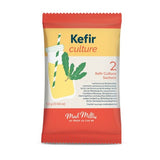
Kefir Culture vs Kefir Grains: Which Should You Use?
The short answer: choose culture if you want kefir now and then, or want to make it with juice or coconut water. Choose grains if you'll make it every day or two and don't mind looking after them.
| Kefir culture | Kefir grains | |
|---|---|---|
| What it is | Freeze-dried bacteria and yeast | Living clusters of bacteria and yeast |
| Looks like | Fine powder | Small cauliflower florets |
| Care between batches | None. Store it in the freezer | Regular feeding |
| How long it lasts | First batch plus two more per sachet | Indefinitely, if kept healthy |
| Works in | Milk, soy milk, coconut water, juice | The base they were grown in: milk or water |
| Best for | Occasional batches | Daily kefir |
Using kefir culture
Tip a sachet of kefir culture into a litre of milk, shake and leave it at 20 to 30 °C for about 24 hours. Save 60 g from that batch to start the next, within 7 days. After two re-cultures, open a fresh sachet. Keep to the same base each time.
Using kefir grains
Grains go into fresh milk, ferment for about a day, then get strained out and moved into more milk. They grow over time. Sleepy grains can take a few batches to recover, and milk that smells rancid and not tangy should be thrown out.
Flavouring your kefir
Flavour after the first 24 hours. Blend milk kefir with mango and turmeric, mixed berries, or vanilla and cinnamon. With juice or coconut water, add washed, chopped fruit and leave it at room temperature for 6 to 12 hours, tasting at 6. Added sugar speeds things up. Keep the lid loose or use cloth, because a sealed jar can build dangerous pressure.
Watch Mad Millie make it
What you need
The Kefir Starter Kit is the easy way in. Our milk kefir recipe walks through it.