How to Dry Hop Beer: When, How Much and How Long
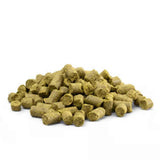
The short answer: add 2 to 6 g of hop pellets per litre near the end of fermentation or just after it, leave them 2 to 4 days at fermentation temperature, then chill and package. Longer isn't better.
How much?
| Style | Grams per litre | For a 23 L batch |
|---|---|---|
| Lager, mid-strength | 1–2 | 25–45 g |
| Pale ale | 2–4 | 45–90 g |
| IPA | 4–6 | 90–140 g |
| Hazy IPA | 6–10 | 140–230 g |
When to add them
| Timing | Pros | Watch for |
|---|---|---|
| Last 4 to 6 gravity points | Yeast uses up oxygen you let in | Yeast can't easily be re-used |
| After fermentation, warm | Simple and reliable | Keep oxygen out; check gravity is stable again |
| Cold, 0 to 12 °C | Good for a short soak with mixing | Slower, and can take several days |
We suggest near the end of fermentation for most home brewers. On a 1.050 pale ale finishing at 1.010, that means adding at about 1.014 to 1.016.
Step by step
- Check the gravity with a hydrometer.
- Sanitise a stainless hop tube or hop bag, or add pellets loose. Fill tubes no more than half, because pellets swell.
- Open the lid briefly, add the hops and close it.
- Leave 2 to 4 days at fermentation temperature.
- Check the gravity is the same for at least 2 to 3 days in a row.
- Chill to 0 to 4 °C for 1 to 2 days so the hops settle, then package.
Hop creep
Hops carry enzymes that free up a little more sugar, so a finished beer can start fermenting again. Bottle too early and you risk over-carbonated or burst bottles. Always recheck the gravity after dry hopping.
Which hops?
Galaxy and Vic Secret for passionfruit and pineapple, Citra for lime and mango, Cascade for grapefruit. Use our hop substitution chart to swap.
If it tastes grassy
The hops were in too long, or there were too many. Shorten the contact time before you cut the amount.