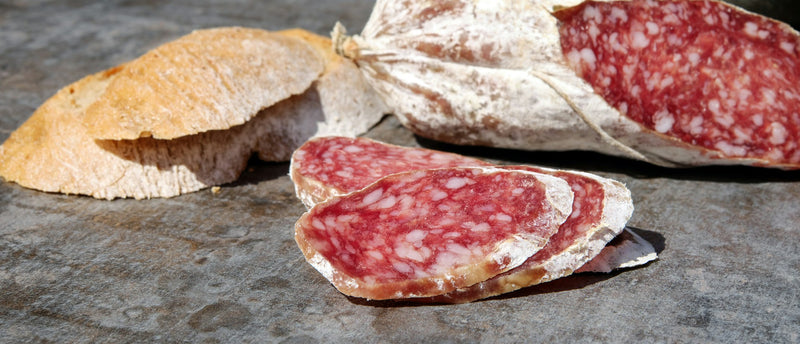
Salami & Sausage · Italian dry-cured salami

Salami di Felino

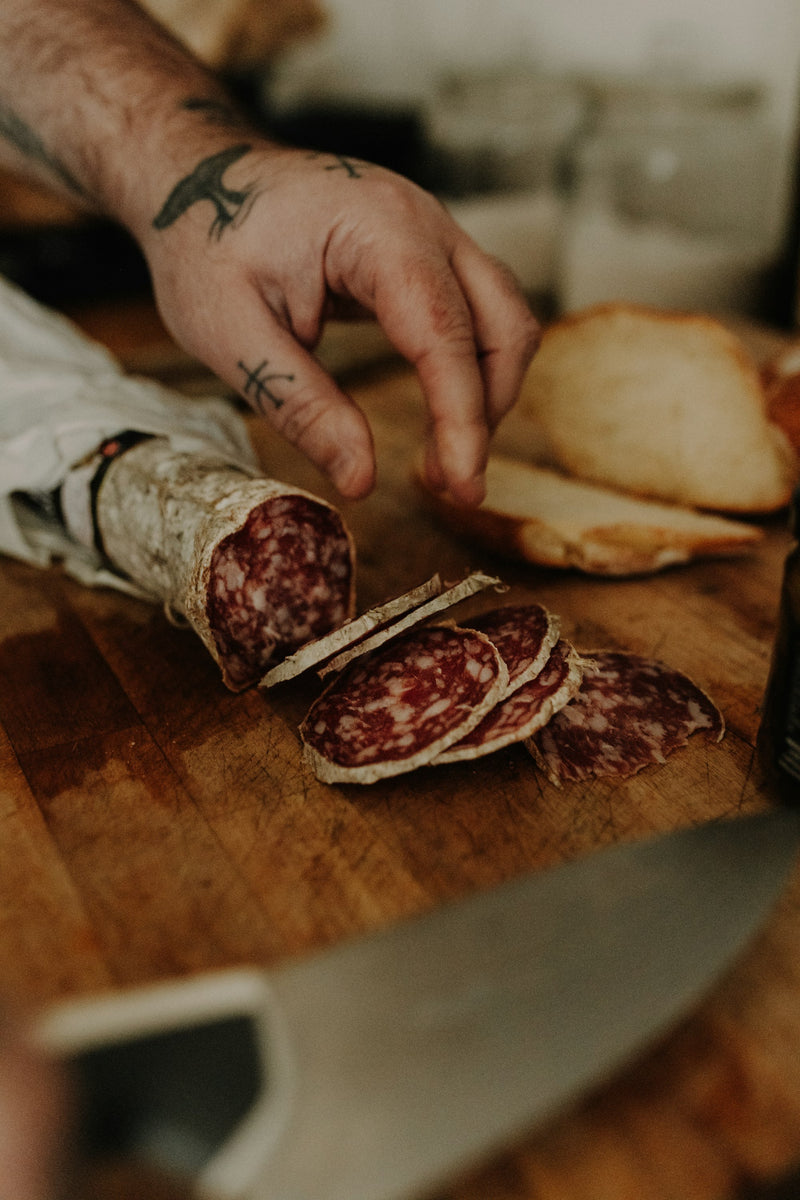
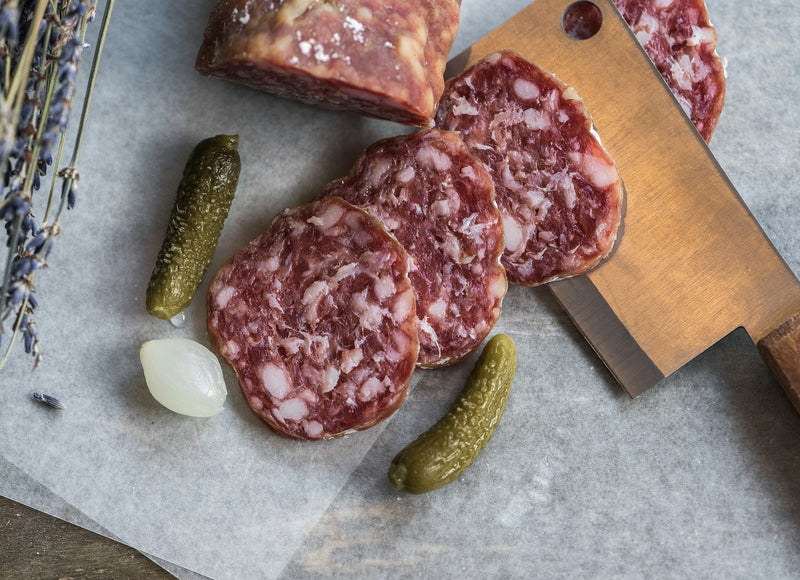
A delicate Felino-style salami: pork with black, white and red pepper, garlic and dry white wine. A recipe by Dave Cann of CLEAVER Salumi Cabinets.

Batch
1 kg
Target loss
35%
Difficulty
Intermediate
Guest recipe · Dave Cann, CLEAVER Salumi Cabinets
Salami di Felino
Shop this recipe

Everything you need

Ingredients for this batch are ticked. Untick anything you already have.

Ingredients for this batch
Salt
Olssons Sea Salt - Flossy
Olssons Sea Salt - Flossy — 2 Kg Recipe requires 28 g · Buying 1 × Olssons Sea Salt - Flossy — 2 Kg Or 25 g if you also use curing salt #2.
In stock $6.90
Meat Cure #2 Fermenting Salt (Prague Powder #2)
Meat Cure #2 Fermenting Salt (Prague Powder #2) — 200 gOptional Recipe requires 3 g · Buying 1 × Meat Cure #2 Fermenting Salt (Prague Powder #2) — 200 g Optional.
In stock $14.90
Spices
Black Peppercorn Powder
Black Peppercorn Powder — 200 g Recipe requires 1 g · Buying 1 × Black Peppercorn Powder — 200 g
In stock $9.90
Casing
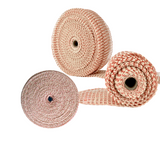
Dried Collagen Salami Casings Tied End
Dried Collagen Salami Casings Tied End — 50 mm x 500 mm / 5 Pack Buying 1 × Dried Collagen Salami Casings Tied End — 50 mm x 500 mm / 5 Pack As needed. We've linked 50 mm collagen casings; natural hog casings work too.
In stock $12.40

Method

13 steps

Prepare

  1. Choose the right meat. Salami isn't made from trim. Use the worked muscles of the shoulder: less wet than belly, moister than leg. Too much belly and the salami can hollow or collapse; too much leg and it turns crumbly and dry.
  2. Trim well. Remove as much silver skin, tendon and sinew as you can, along with the soft intramuscular fat that renders. Connective tissue makes salami stringy and chewy, and soft fat smears when you mince and bind, which can cause oiliness or irregular curing.
  3. Weigh the salt. Weigh the meat and fat together, then weigh 2.8% to 3% of that in fine sea salt: 28 g to 30 g per kg. If using curing salt #2, use 25 g to 27 g sea salt plus 3 g curing salt per kg.

Mince and bind

  1. Mince. Mince 200 g of the fat with the pork through a medium plate, and keep the 100 g of diced fat aside.
  2. Salt and bind. On a large table, combine the meat, fat and hand-cut fat with the salt. Massage and knead until the meat releases its myosin proteins and turns sticky. Keep going until it acts as a single piece, sticking to the bench and your hands.
  3. Add the flavour. Add the three peppers, garlic and dry white wine. Keep the red peppercorns whole. If you are fermenting, add 5 g dextrose and the starter culture too.

Tip: Fry a little of the mixture to test the spices and seasoning. It should taste salty; this is critical for the curing process.

Fill

  1. Fill the casings. Using a mincer with a sausage funnel, or a sausage filler, pipe the meat into the casings. Match the nozzle to the casing size: too small a nozzle pipes "snakes" of meat and traps air.
  2. Fill them right up. Fill each casing just short of bursting. Under-filling is one of the main causes of hollowing, irregular curing and collapsing.
  3. Net and prick. With collagen or fibrous casings, put each salami in netting for compression and prick the surface to release air pockets and help moisture escape. Natural casings don't need netting or pricking.

Tip: Dave's advice: deliberately burst your first casing to get a feel for how much it holds.

Ferment (optional)

  1. Ferment, if you're using a culture. Hang the salami at 20°C to 24°C and 80% to 90% relative humidity for 24 to 48 hours. Then cool it and lower the humidity to drying conditions.

Tip: Ferment fully or not at all: culture, sugar, warmth, humidity and time all need to be there. A meat pH tester will show the drop, from about pH 5.6 to 6.0 down to pH 4.6 to 5.2 in pork.

Dry

  1. Hang to dry. Air dry at 9°C to 13°C and 70% to 80% relative humidity, in a dark place with passive airflow: no fan, a gap between each stick and no overcrowding.
  2. Weigh to know when it's ready. Weigh each salami when you hang it, then check it regularly. It's ready once it has lost at least 30% of its raw weight; most homemade salami is dried to 35% to 40%.
  3. Watch the mould, especially in the first 10 days. White, chalky Penicillium mould with bluish-green blooms is what you want. Wipe off black, dark grey, army green or yellowish furry mould straight away with 20% vinegar and 80% water, then fix your humidity or airflow.

Tip: Too warm or too dry and the outside hardens before the inside dries (case hardening). Too cold or too humid and drying stalls; above 85% humidity, spoilage moulds take hold.

Make it your own

Once the salt, binding and drying are right, the spices are yours. Keep the salt the same, adjust the pepper, chilli or wine to taste, note what you change, and adjust the next batch.

About this recipe

This recipe comes from Dave Cann, founder of CLEAVER Salumi Cabinets, and is part of the salami making class we run together. Follow Dave's salumi on Instagram.

Safety information

Dry-cured salami is never cooked, so salt, drying and hygiene are what keep it safe. Keep the meat cold while you work and sanitise every surface and tool. Weigh salt and curing salt on a scale that reads to 0.1 g: at least 28 g fine sea salt per kg of meat and fat, or 25 g sea salt plus 3 g curing salt #2. Dry at 9°C to 13°C and 70% to 80% relative humidity, and don't eat the salami until it has lost at least 30% of its raw weight. Wipe off black, grey, green or yellow furry mould straight away with 20% vinegar in water; if it returns or has been there more than a couple of days, throw the salami out. Store curing salt labelled, away from table salt and out of reach of children.

0 selected