7 Fermented Vegetables to Make at Home (Beyond Sauerkraut)
The short answer: pack firm vegetables into a clean jar, cover with a 3.5% to 5% salt brine, keep everything under the liquid, and leave at 18 to 22 °C for 1 to 2 weeks. Then refrigerate.
The brine
| Strength | Salt per litre of water | Use for |
|---|---|---|
| 3.5% | 35 g | Carrots, cauliflower, beans |
| 5% | 50 g | Cucumbers, capsicum, warm weather |
Weigh the salt. Spoons vary too much between salts. Use non-iodised salt, such as cooking sea salt, and water that's been boiled and cooled or filtered.
Seven to try
- Carrot sticks with garlic and dill
- Green beans with chilli and mustard seed. Blanch for 1 minute first
- Baby cucumbers with garlic and a bay leaf for crunch. Use 5% and trim the blossom end
- Cauliflower with turmeric and cumin seed
- Beetroot with ginger
- Capsicum and zucchini, cut thick, at 5%
- Asparagus with chilli and lemon peel
Step by step
- Wash the vegetables and jar well. Cut evenly.
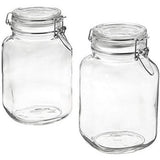
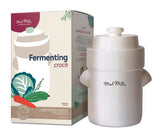
- Pack into a Fido jar or crock, leaving 4 cm at the top.
- Pour over the brine. Weigh everything down so nothing floats.
- Close the clip jar without the rubber seal, or use an airlock, so gas can escape.
- Leave at 18 to 22 °C, out of the sun. Taste from day 5.
- When it's sour enough, move it to the fridge. Eat within 2 to 3 months.
Do I need a culture?
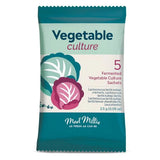
No. The vegetables bring their own bacteria. A vegetable culture makes the start quicker and more even. It contains milk.
Is it safe?
- The brine should turn cloudy and smell pleasantly sour.
- White, flat film is usually harmless kahm yeast. Skim it off.
- Throw it all out if you see fuzzy or coloured mould, or it smells rotten, or turns slimy.
- Aim for pH 4.6 or lower. Test with a meter or strips if you can.
- Don't seal it and leave it at room temperature. Pressure builds.
Start with our sauerkraut or kimchi, then try giardiniera, which uses vinegar instead.
Shop the products in this post