The Artisans Bottega · artisansbottega.com.au/pages/recipe/little-creatures-style-pale-ale
Beer · American Pale Ale
Little Creatures-Style Pale Ale
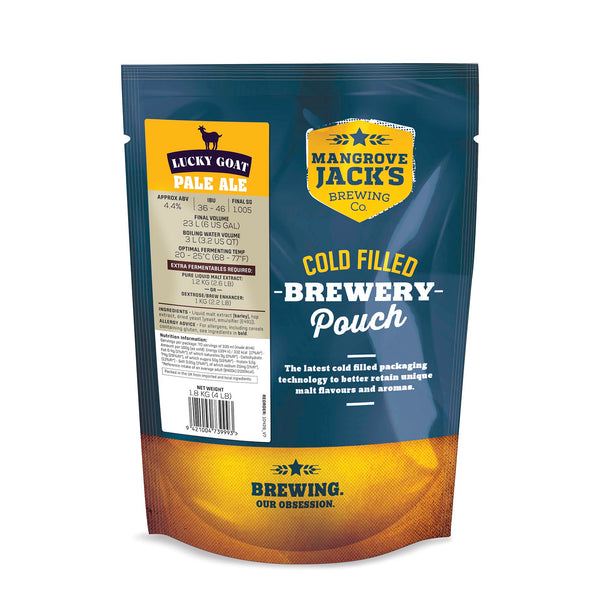
A full-flavoured pale ale with a firm, clean bitterness. Built on the Lucky Goat Pale Ale kit and dry hopped with Cascade and Chinook for a big citrus and pine aroma.
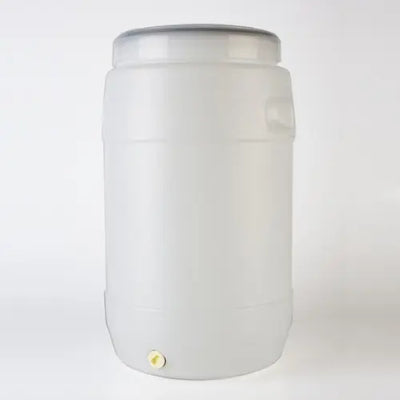
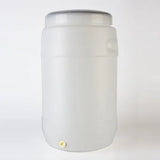
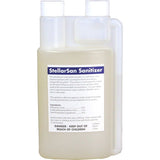
Clean and sanitise. Clean and sanitise your fermenter, lid, airlock, tap, spoon and hydrometer.
Tip: Use a no-rinse sanitiser so you don't have to rinse with tap water afterwards.
Soften the pouch. Stand the sealed pouch in hot water for about 10 minutes so the malt pours easily.
Dissolve the pouch and additions. Pour about 2 litres of just-boiled water into the fermenter. Squeeze in the pouch and add the 1 kg Beer Enhancer Australian Bitter No.40. Stir until fully dissolved.
Top up to 23 litres. Top up with cold tap water to the 23 litre mark and stir well. Aim for 18–22 °C.
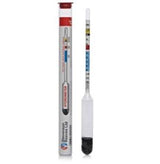
Take a gravity reading. Write down the hydrometer reading — this is your original gravity (OG). ABV calculator
Pitch the yeast. Sprinkle the Mangrove Jack's M42 sachet over the surface, in place of the yeast supplied with the pouch.
Tip: Don't pitch into wort warmer than 25 °C — it stresses the yeast and can cause off-flavours.
Fermentation
Seal and ferment. Fit the lid and airlock and keep the fermenter at 18–22 °C, out of direct sunlight.
Dry hop
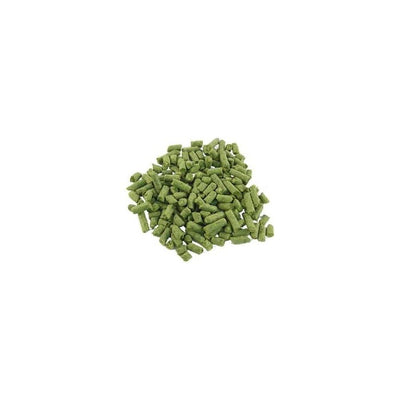
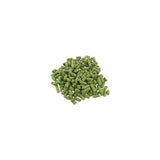
Add the dry hops. When the airlock bubbling slows (usually around day 5), add 28 g Cascade and 28 g Chinook hop pellets. Leave for 4 days, then bottle.
Check it has finished. Fermentation usually takes 7–10 days. When the hydrometer reading is the same two days in a row, it's ready to bottle.
Tip: Only bottle once the gravity is stable. Bottling too early can over-carbonate the beer and burst bottles.
Bottling
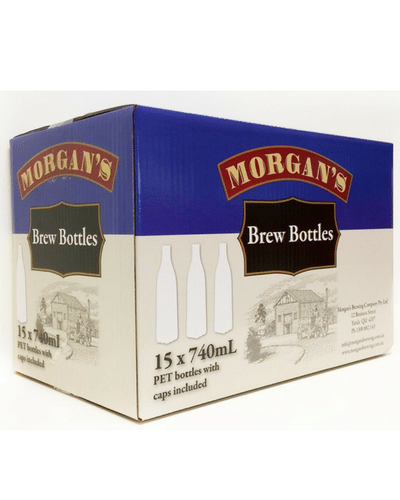
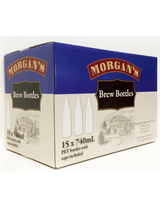
Prime and fill. Add carbonation drops or measured dextrose to clean, sanitised bottles, fill to about 3 cm from the top and seal. Priming sugar calculator
Condition and enjoy. Store upright at 18 °C or warmer for at least 2 weeks, then chill before serving.
Safety information
Only bottle once the hydrometer reading is the same two days in a row. Bottling before fermentation has finished builds up too much pressure and can burst glass or PET bottles. Store bottles where a failure can't hurt anyone, and drink responsibly.

 1 / 5 photos