Sausage Casings Guide: What Casings Are Made Of and Which to Use
The short answer: sausage casings are made from one of three things. Natural casings are cleaned animal intestine, from pigs (hog casings), sheep or cattle. Collagen casings are made from collagen extracted from beef or pork hides and are edible. Fibrous, cellulose and plastic casings are made from plant fibre or synthetic film, are not eaten, and are peeled off before serving.
Which one you use decides the bite, the look and how much preparation you do before filling. Below is what each casing is made of, how to prepare it, and a size chart for matching the casing to the sausage or salami you want to make. We sell all of them at our shops in Laverton North and Epping, and this is what we tell people across the counter every salami season.
Natural casings: what they are made of
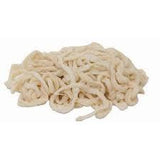
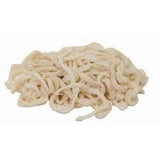
Natural sausage casings are made from the submucosa of the intestine, a tough inner layer that is mostly natural collagen. The rest of the intestine is scraped away and the casing is cleaned, graded by diameter and packed in salt. They have been used for a very long time and are still the most popular choice today because they are flexible, tender, easy to stuff and durable enough to hold up to smokehouse processing. Your natural casings will come either packed in salt or in a saline solution. Casings packed in salt must be flushed, then soaked overnight before stuffing. Pre-flushed casings are ready to stuff after a 20-minute soak in warm water. Both can be repacked in salt and stored in the freezer for up to a year.
TAB Tip: Natural casings are edible, strong, and let smoke and air through, which is why they are the traditional choice for salami that needs to dry. The type you need depends on the animal they come from and the diameter of the sausage.
- Hog casings: These are made from the intestines of pigs and give sausages a very meaty flavour. They are also the traditional choice for any type of link sausage, such as bratwurst, Italians, kielbasa and many more.
- Sheep casings: These tend to be smaller than the other types of natural casings and are used for small or thin sausages. Their smaller diameter makes them perfect for small link sausages, from breakfast sausages and hot dogs to snack sticks.
- Beef rounds or casings: These are very durable and can be very large, so they suit a variety of large sausages or salamis. Beef rounds get their name from their characteristic round shape. They have minimal fat and are ideal for fresh, cooked or smoked sausages such as Ring Bologna, Polish, Mettwurst, Holsteiner and Blood Sausage.
- Beef middles: These long, straight casings have a heavier, thicker wall with some fat. They are ideal for dry and semi-dry sausages like Salami, Liverwurst, Bologna or Summer sausage.
- Beef bung caps: Made from the end of a cow’s large intestine, beef bungs are large-diameter casings that are typically used for large bologna, headcheese, souse, capicola and mortadella.
Manufactured casings: collagen, fibrous and cellulose
Manufactured casings are made in a factory rather than cleaned from an animal, so every metre is the same diameter. Collagen casings are edible. Fibrous, cellulose and plastic casings are not, and are peeled off the sausage before eating.
Collagen casings
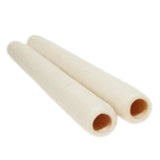
Collagen casings are processed, edible casings produced from the collagen in cow or pig hides, bones and tendons. While they do not give much of a snap, they are inexpensive and give more uniformity in weight and size than their natural counterparts. Collagen casings are packaged in sheets around a tube that can easily be loaded onto your stuffing horn, with no soaking required. They also come in two varieties based on processing:
- Fresh: Fresh collagen casings are used specifically for fresh sausages like bratwurst and breakfast links. These tend to be more tender casings that cannot withstand hanging in a smokehouse.
- Smoke: Smoked or processed collagen casings are great for making any type of smoked sausage, like snack sticks or wieners. Their durability holds up well when hung on smoke sticks during processing, and they are available in clear and mahogany colours (no taste variation).
Fibrous casings
Fibrous casings are inedible casings made from a form of cellulose material that peels away easily when cooked. They are most commonly used for making pepperoni, summer sausage, bologna, liverwurst and other fine smoked sausages. Their durability allows tight stuffing, which makes them ideal for fine or emulsified sausages. Fibrous casings can be made from different types of fibres and are very strong, and a lining of proteins inside the casing also lets them shrink as a sausage dries. Fibrous casings should be soaked for 25 to 30 minutes in warm water (about 27 to 38°C). Lay the casings flat in the warm water and submerge them completely, with the tied ends lower so that any trapped air can escape. After soaking, squeeze out the excess water before stuffing.
Alternative casings
If you do not have access to natural or artificial casings, or just do not want to use them but still want to make sausage links, you can make casings from strips of muslin. To form casings about 38 mm in diameter, cut strips about 15 cm wide and 40 cm long. Fold them lengthwise and stitch the edges together to form tubes. There are also vegan-style casings. This vegan sausage casing is suitable for your DIY sausage making. If you do not use casings at all, you can still form links by rolling the mixture up in foil or plastic wrap and refrigerating it until firm. You will need to add a binder (breadcrumbs, soy protein concentrate, etc.) to the sausage mix, normally 5% to 10% of the mix, to keep the meat from separating during cooking.
Are sausages still made with intestines?
Many are. Natural hog, sheep and beef casings are cleaned intestine, and they are still the traditional choice for Italian sausage and salami. Plenty of commercially made sausages use collagen casings instead, which are made from animal collagen rather than intestine. Skinless sausages, such as many hot dogs, are formed in a cellulose casing that is peeled off before they are packed. If you want to know what a bought sausage is in, the label or your butcher can tell you.
Sausage casing size chart
After all of this information, you might be wondering what the best type of casing is for the sausage you have in mind. We have made it easy for you with this guide to choosing the perfect casing:
| HOG CASINGS | SHEEP CASINGS | FIBROUS CASINGS | |||
| Diameter | Usage | Diameter | Usage | Diameter | Usage |
| 29-32 mm | Small Brats, Link Sausage or Landjaeger | 20-22 mm | Breakfast Sausage or Small Snack Sticks | About 25 mm | Thuringer, Pepperoni, Salami, Cracker-Sized Sausages |
| 32-35 mm | Brats • Italian Sausage • Rope Sausage | 22-24 mm | Breakfast Sausage or Snack Sticks | About 50 to 65 mm | Traditional Summer Sausage |
| 35-38 mm | Polish • Kielbasa | 24-26 mm | Small Hot Dog or Wiener | About 100 mm | Large Summer Sausage or Hard Salami |
| 38-42 mm | Bologna | 26-28 mm | Large Hot Dog , Wiener or Landjaeger | About 200 mm | Olive & Pimento Loaf, Mortadella, Deli & Sandwich Meats |
How much meat per casing?
Don’t worry if you don’t know how much meat to use for each type of casing, because we have the ultimate guide to answer this question easily. If you like, you can download the image below to your computer or smartphone and check it any time:

Which casing for which job?
- Fresh Italian pork sausages and snags: hog casings, or collagen casings if you want every sausage the same size with no soaking.
- Thin sausages, chipolatas and breakfast links: sheep casings.
- Salami and other sausages that hang to dry: beef middles, hog casings or collagen salami casings, because they let moisture out as the salami dries.
- Big, sliced sausages like mortadella and large salami: beef bungs or fibrous casings.
Find every casing in our natural casings and bungs and collagen casings ranges, and everything else for the season in salami and sausage making. Tag us @artisans.bottega when you share your sausages. We love seeing what our Artisans Family makes.